FIRE AND WATER DAMAGE RESTORATION
Fire and Water Damage Restoration Gilbert, AZ
The fire department’s job ends when the flames are out. Yours is just starting. The water that saved your house is now standing in your ceilings and soaking your floors, and the soot on your walls starts etching surfaces within days if nobody cleans it. Fire and water damage restoration in Gilbert, AZ is the work of handling both losses as one job, and it is what our crews do after the trucks leave your driveway.
Soot and Standing Water Both Get Worse Daily
Call as soon as the fire department says it is safe to make the call. We dispatch to Gilbert and the surrounding East Valley every hour of every day.
One Fire Leaves Two Kinds of Damage
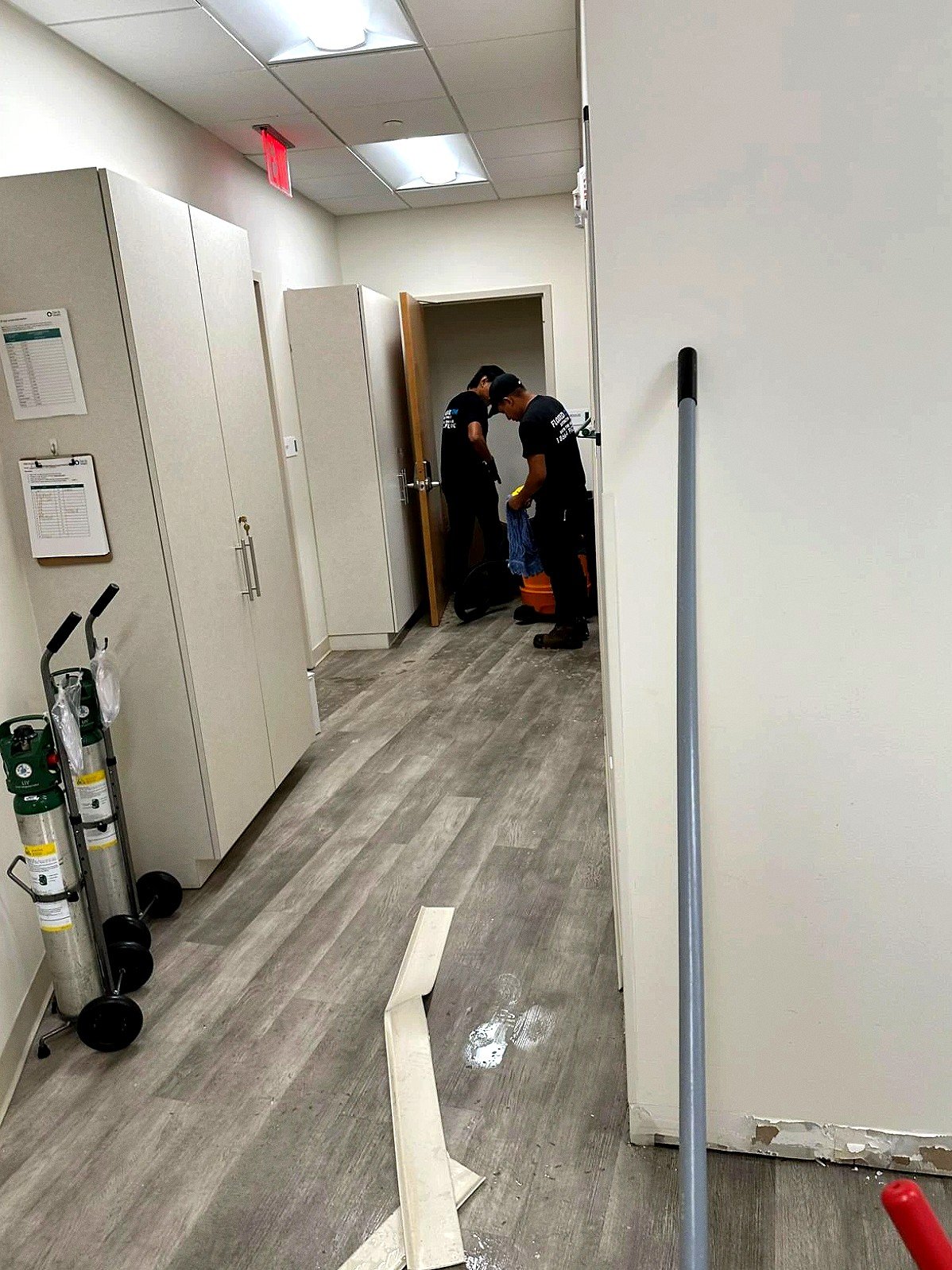
People expect fire damage and are surprised by the water. A single engine can put hundreds of gallons into a house in under an hour, and that water runs into wall cavities, insulation, and subfloors the fire never touched. You end up with burned materials in one room and soaked materials in three others.
The two damages also interact. Soot is acidic, and wet soot etches metal, glass, and finishes far faster than dry soot. Wet smoke residue smears instead of lifting. That is why a combined fire and water loss has to be worked as one project, with the soot, the water, and the odor handled in the right order by the same crew.
Fire and Water Damage Restoration Runs in a Set Order
First we make the structure safe and secure: board-up on broken openings, tarps over burned roof sections, and utilities confirmed off or isolated. Then soot gets addressed on every surface it touched, because the longer it sits wet, the more permanent the staining becomes. Dry soot gets HEPA vacuumed and sponged. Wet residue gets cleaned with the method that matches the surface.
Water runs parallel to all of it. Standing water gets extracted, wet materials that cannot dry get removed, and dehumidifiers and air movers go in with the same moisture logging we use on any flood job. Only after soot, water, and odor are under control does reconstruction begin, and our own crews handle the drywall, paint, and finish work so you are not hiring a second company mid-claim. If the water side of your loss needs its own deep dive, our Water Damage Restoration page covers that half in detail.
Why Soot Has to Be Handled Before Drying Ends
Soot settles into everything the air touches, including the cavities your drying equipment is moving air through. If we dried the house first and cleaned soot last, we would be blowing residue deeper into the structure the whole time. Cleaning soot early and filtering the air with HEPA scrubbers while drying runs is the order that keeps the clean parts of your house clean.
Odor Work That Reaches What Sprays Cannot
Smoke odor lives in the same hidden places the water found: insulation, ductwork, the back side of drywall, the padding under carpet. Masking sprays cover the smell for a day and then it returns. We remove the odor source by removing or sealing the materials that hold it, then run ozone or hydroxyl machines to break down what is left in the air and on surfaces. Ready.gov’s guidance on recovering after a fire agrees on the basics: clean or remove what the smoke touched, and do not rely on masking.
One Crew for the Whole Loss, Not Two Companies
Splitting a fire loss between a water company and a fire cleanup company means two scopes, two schedules, and a gap where each one assumes the other handled something. We keep the entire loss under one crew and one written scope. Here is what that crew does on a fire and water job:
- Board-up and roof tarping on the first visit to secure the structure
- Soot testing to match the cleaning method to each surface
- Water extraction and structural drying running alongside soot cleanup
- HEPA air scrubbing for airborne soot and smoke particles
- Odor treatment with ozone or hydroxyl machines after source removal
- Contents inventory with clear clean, restore, or replace decisions
- One adjuster file covering both the fire and water sides of the claim
- In-house reconstruction for drywall, paint, and finishes once drying is done
The Fire Is Out. The Cleanup Clock Just Started.
Soot etches, water spreads, and odor settles in deeper every day you wait. Call and we will put a fire and water crew on the road to your Gilbert, Chandler, Mesa, or Queen Creek home, any hour it happens.
F. A. Q
Frequently Asked Questions
Call your insurance carrier to open the claim, then call a restoration company before anything else gets touched. Do not wipe soot or mop water yourself, because wiping spreads residue and can press it into finishes permanently. Take photos of every room for your claim while you wait for the crew.
Fire hoses move an enormous volume of water in a very short time, and it follows gravity into places the flames never reached. Ceilings, wall cavities, and subfloors soak it up within the first hour. That is why nearly every structural fire also becomes a water damage job.
Yes, and the damage gets worse fast. Soot is acidic, and when it sits wet on metal, glass, tile, or finishes it etches and stains within days, sometimes permanently. Plastic and fiberglass surfaces yellow, and porous materials absorb the smell deeper the longer soot stays. Early cleaning is the difference between restoring a surface and replacing it.
In most policies, yes. The water damage that firefighting causes is considered part of the fire loss, so both sides are handled under the same claim. We document soot, water, and odor work in one file with photos and moisture logs so your adjuster sees the whole picture at once.
Yes, when the odor source is removed or sealed instead of masked. Materials that hold smoke, like burned padding and insulation, get removed, and the rest gets cleaned and treated with ozone or hydroxyl machines. A house that still smells like smoke a month after a fire almost always had masking instead of source removal.
No, and splitting the job usually costs more in the end. The soot, water, and odor work overlap in every room, so two companies means two mobilizations and a gap where each assumes the other covered something. One crew with one scope keeps the sequence right and the claim simple.
A small, contained kitchen fire with water in one room can be cleaned, dried, and repaired in two to three weeks. A larger loss with structural burning and whole-house soot runs several weeks to a few months, mostly driven by reconstruction. We give you a written timeline after the first inspection and update it as the claim develops.
Only if the fire department and your adjuster say the structure is safe and utilities are secure. Even then, live elsewhere during active soot and odor work if anyone in the home has asthma, a heart condition, or is pregnant, because airborne soot is a real respiratory irritant. We can document the need for temporary housing for your carrier when the loss warrants it.