WATER MITIGATION
Water Mitigation Gilbert, AZ
Restoration rebuilds what water destroys. Mitigation is the work that happens first, and it decides how much rebuilding you will need. Water mitigation in Gilbert, AZ is our specialty: shut off the source, contain the water, pull out what is soaked, and get the structure drying before mold and swelling make everything worse. Crews roll to Gilbert, Queen Creek, Chandler, and Mesa homes with the equipment to do all of it in one visit.
Water Moves Faster Than You Can Towel It Up
A dispatcher is on the line whenever you call, and crews leave our Gilbert shop for mitigation calls all day and all night.
Mitigation Is the Work That Keeps a Small Loss Small
Every water loss starts small and grows until someone stops it. Drywall that could have been dried on Tuesday gets torn out on Friday because it sat wet. A subfloor that needed a day of air movers becomes a full replacement because the water was left to soak in. Mitigation is the discipline of acting on the loss you have today, not the one you will have next week.
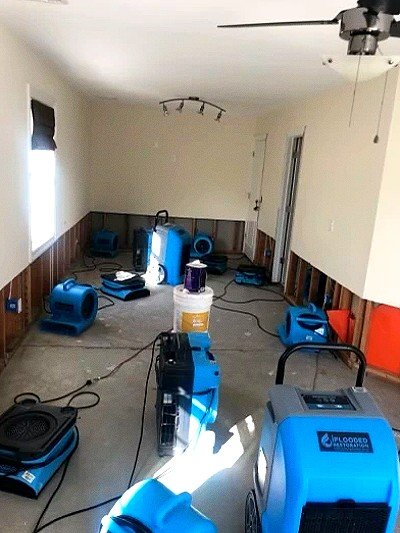
Our crews treat mitigation as its own job, not the opening act of a rebuild. We stop the source, contain the water to the rooms it has reached, extract what is standing, and set drying equipment sized to the space. Then we measure. If a room reads dry two days in a row, the equipment comes out and the loss stays small.
What Water Mitigation Covers on Your Property
Mitigation starts with source control. A burst supply line gets valved off. A failed water heater gets isolated. Roof intrusion from a monsoon storm gets tarped so the next cell does not add to the loss. Nothing else happens until the water has nowhere new to go.
Next we protect everything that is still dry. That means sealing off unaffected rooms with plastic so migrating moisture cannot reach them, lifting furniture onto blocks, pulling rugs, and moving boxes and electronics up and out. Half of mitigation is simply keeping dry things dry.
Then comes the wet side: extraction of standing water, removal of padding and materials that cannot dry, antimicrobial treatment on what stays, and dehumidifiers and air movers placed from moisture readings, not guesswork.
Containing Water So It Stops Traveling
Water moves through a house the way it moves through a sponge, along the easiest path. It follows the gap under a baseboard, the seam between sheets of subfloor, the channel behind a kitchen toe kick. We find those paths with meters and thermal cameras and cut them off, so the loss stays in the rooms it started in instead of spreading through the rest of the floor plan.
Why Your Insurance Adjuster Cares About Mitigation
Most Arizona homeowners policies expect you to take reasonable steps to protect the property after a loss, and adjusters read a claim partly by how fast mitigation started. A dated moisture log, photos of the source, and equipment records show the carrier you did everything right, which is the strongest position a claim can be in. We build that file as we work, not after the fact. For coverage questions specific to your policy, the Arizona Department of Insurance publishes plain-language guides for homeowners.
What a Mitigation Crew Does Differently
Any company can drop off fans. A mitigation crew leaves your house measurably more stable than it found it. Here is what our crews do on a mitigation call in Gilbert:
- Source control first: valves, supply lines, and appliances isolated before cleanup
- Unaffected rooms sealed with plastic so moisture cannot migrate
- Furniture lifted, blocked, or packed out the same visit
- Antimicrobial treatment on wet structural materials
- Dehumidifiers sized to the moisture load, not to the room count
- Baseline moisture readings in every room, dry or wet
- Daily logs written so your adjuster can read them without a phone call
- A written scope that separates mitigation costs from rebuild costs
Damage Still Spreading? Mitigation Is the Call to Make.
If water is still moving through your house, or the drying you started is not keeping up, bring in a mitigation crew before the loss grows again. We answer the phone whenever it rings, and we dispatch to Gilbert, Chandler, Mesa, and Queen Creek from our Gilbert shop.
F. A. Q
Frequently Asked Questions
Mitigation means limiting the damage a water loss can do, and it covers everything from shutting off the source to drying the structure. Extraction, containment, removing soaked materials, antimicrobial treatment, and dehumidification all fall under it. Think of it as the emergency phase that decides how much repair work comes later.
No, though the two run back to back. Mitigation stops and stabilizes the loss, while restoration rebuilds what could not be saved, like new drywall, paint, and flooring. We handle both, and our Water Damage Restoration crew picks up exactly where the mitigation crew left off.
Most homeowners policies in Arizona include a duty to protect the property from further damage after a loss, and carriers can question claims where water sat for days untouched. Reasonable mitigation also usually costs far less than the secondary damage it prevents, so it protects you either way. Keep receipts and photos of everything you do before the crew arrives.
Gilbert addresses usually see our truck in under an hour, and Chandler, Mesa, and Queen Creek runs follow close behind. The truck arrives loaded with extraction tools, plastic for containment, and drying equipment, so the mitigation starts on the first visit.
Mold needs moisture to start, and mitigation removes the moisture before spores get going, which is why fast mitigation is the cheapest mold prevention there is. The EPA's moisture control guidance says the same thing: dry materials quickly and mold has nothing to grow on. If materials have already been wet for days, we fold mold remediation into the plan instead.
Small leaks are exactly the losses that turn expensive, because water inside a wall cavity can sit for weeks while the drywall surface still looks fine. A mitigation visit with a moisture meter tells you in ten minutes whether the cavity is wet, and if it is, we open, dry, and treat it before mold and structural rot start.
Mitigation is priced from the affected square footage, the water category, and the equipment days it takes to reach dry readings, and we put that scope in writing before work starts. Sudden losses like burst pipes are typically covered, and we bill the carrier directly with the moisture logs and photos attached. Your deductible is usually the main out-of-pocket piece.
Once every reading holds at dry levels, the equipment comes out and we walk the property with you to see what survived and what needs rebuilding. If repairs are needed, our Water Damage Cleanup and restoration teams take it from there, so you are not coordinating three companies. You also keep the full moisture log for your records and your carrier.