WATER DAMAGE INSPECTION
Water Damage Inspection Gilbert, AZ
Most water damage hides where you cannot see it. Behind the drywall, under the tile, inside the wall cavity that looks perfectly fine from the outside. By the time a stain appears on your ceiling or a baseboard starts to swell, the problem has been growing for weeks or months. Our water damage inspection in Gilbert finds the moisture that is invisible to the naked eye, serving Chandler, Mesa, and Queen Creek with thermal imaging and moisture mapping that shows exactly where water has traveled.
A Musty Smell Is Your First Warning Sign
You do not need to see water to have a water problem. Call when you notice an odor, a stain, or just a feeling that something is not right. We inspect homes across the East Valley every day.
What a Water Damage Inspection Actually Finds
Homeowners in Gilbert usually call us for one of three reasons. There is a stain on the ceiling or wall that appeared overnight. There is a musty smell in one room that will not go away no matter how much they clean. Or there was a leak that seemed small at the time, and now they are worried about what it did behind the walls.
The inspection starts with your story. When did you first notice the problem. What changed in the house. Did you have a monsoon storm, a plumbing repair, or an appliance failure. That history tells us where to look first.
Then we bring in the tools that see what eyes cannot. Thermal imaging cameras show temperature differences in walls and ceilings, which reveal wet insulation and soaked drywall. Moisture meters penetrate surfaces to give us exact readings of how wet a material is. We map every room, not just the one with the visible problem, because water travels.
The result is a moisture map that shows every affected area, with readings documented for your records and your insurance carrier if a claim is involved.
Thermal Imaging Finds Water Inside Walls
A thermal camera does not see water directly. It sees temperature. Wet materials hold heat differently than dry materials, so a wet wall shows up as a cool spot on the thermal image. This is how we find water behind tile, inside wall cavities, and under flooring without tearing anything open.
In Gilbert homes, thermal imaging is especially useful for finding evaporative cooler leaks, condensate line overflows, and monsoon water that got behind stucco. The camera shows the full extent of the wet area, which is almost always larger than the visible stain.
Moisture Readings Tell Us What Needs to Be Done
A number on a moisture meter tells a clearer story than a visual inspection ever could. Dry standard for drywall is usually below 10 percent moisture content. Anything above that needs attention. For wood framing, we look for readings under 15 percent. Concrete and slab readings have their own scale.
We take readings in every room, even the ones that look dry, because water follows the path of least resistance. A leak in the bathroom can show up as wet subfloor in the hallway. We document every reading so you have proof of the extent of the damage.
When an Inspection Turns Into a Mitigation Job
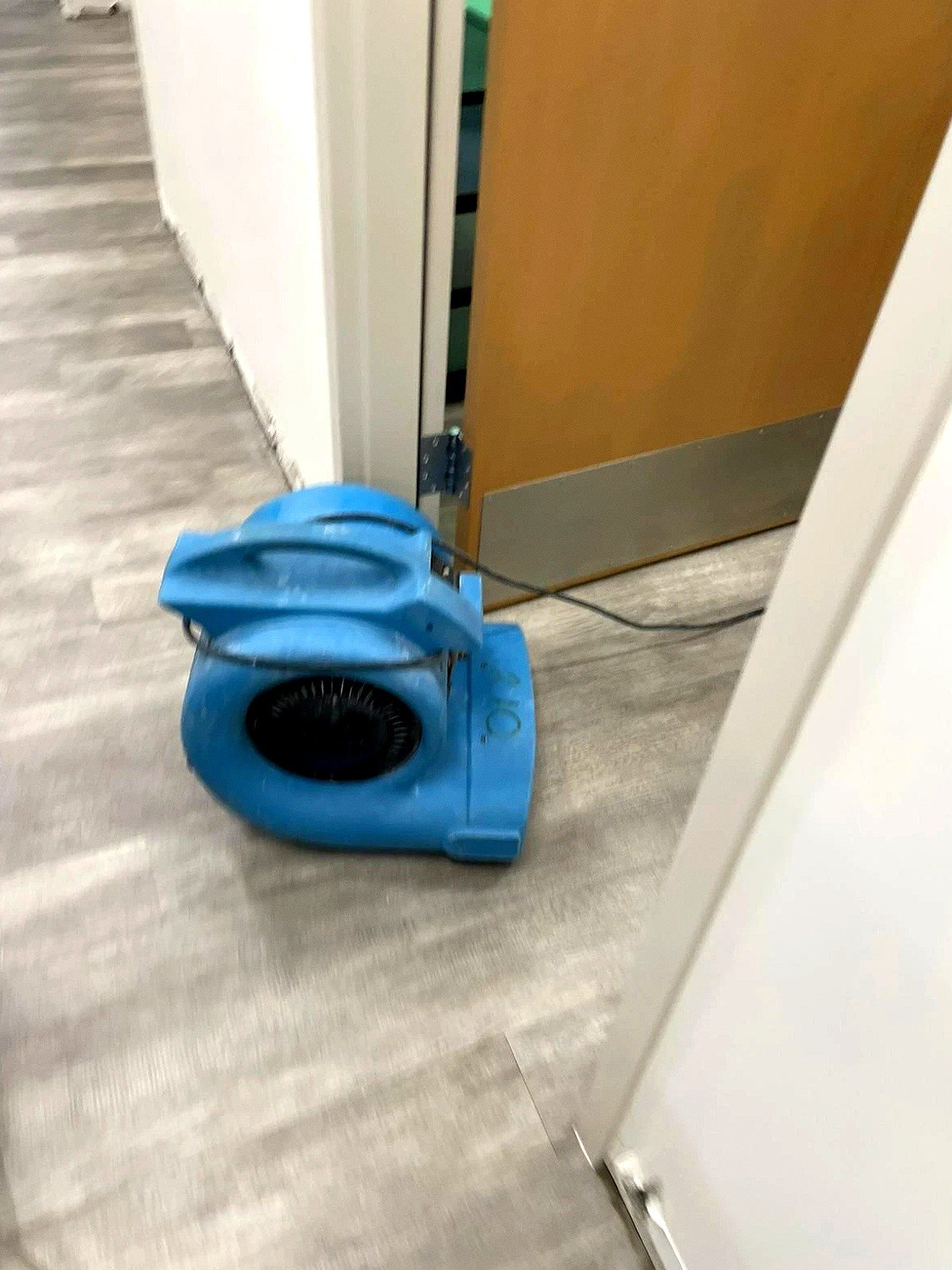
Not every inspection leads to major work. Sometimes we find a small leak that dried out on its own, and all that is needed is a repair and some air circulation. Other times the readings show widespread moisture that needs extraction, demolition, and drying equipment.
If mitigation is needed, we explain the scope and price before anything is touched. You approve the work in writing, and we start the same day. Our Water Mitigation crew handles the extraction and drying, so you are not waiting for a second company to show up.
What Homeowners Miss When They Inspect Themselves
Most homeowners check the obvious spots: under the sink, around the toilet, near the water heater. What they miss is the water that traveled. A supply line leak inside a wall can soak insulation six feet from the source. A clogged condensate line can overflow and wet the subfloor under the bedroom carpet.
We inspect the whole system, not just the symptom. That means checking the roof line for monsoon intrusion, the slab for weep hole backups, the HVAC system for condensate issues, and every plumbing penetration through walls and floors. It takes longer than a visual check, but it finds the problems that cause mold six months later.
Why Insurance Companies Require Professional Inspections
If you file a water damage claim, your carrier will ask for documentation. Photos of the stain are not enough. They want moisture readings, thermal images, and a written scope that shows the extent of the damage. Our inspection reports include all of that, formatted so your adjuster can review it quickly.
We also classify the water category and the class of evaporation needed, which are the same terms your insurance uses. That alignment speeds up the approval process. For more on filing a claim, the Arizona Department of Insurance has homeowner guides that explain the process.
What You Get From a Water Damage Inspection
A professional inspection is more than a look around with a flashlight. Here is what our inspection includes:
- Thermal imaging of all affected walls, ceilings, and floors
- Moisture meter readings in every room, documented with photos
- Identification of the water source and category
- A written moisture map showing the full extent of affected areas
- Classification of the evaporation class needed for drying
- Recommendations for mitigation or repair work
- A report formatted for insurance claims when applicable
- Clear answers to your questions about what can be saved
Suspicious of a Hidden Leak. Get Eyes on It This Week.
Water damage does not announce itself with a siren. It creeps in through small leaks and slow seeps. If something feels off in your home, call us for an inspection before the problem grows. We serve Gilbert, Chandler, Mesa, and Queen Creek with same-day inspections when possible.
F. A. Q
Frequently Asked Questions
A basic inspection for a single room or suspected leak usually runs a few hundred dollars. Whole-house inspections after a major event cost more because of the time and equipment involved. We provide the price before we start, and if mitigation work is needed, the inspection cost is often rolled into the larger job. Insurance usually covers inspection costs for sudden and accidental losses.
Most inspections run 45 to 90 minutes depending on the size of the affected area and how much thermal imaging is needed. A simple bathroom leak might take 30 minutes. A whole-house inspection after monsoon flooding can take 2 to 3 hours. We do not rush it because missing a wet cavity costs more later.
Finding the source is only half the battle. The water that entered your home likely traveled beyond the visible area. An inspection shows you the full extent of the damage, which determines whether you need a simple repair or a full mitigation job. It also gives you the documentation you need for insurance.
We look for the conditions that cause mold during every inspection. High moisture readings, musty odors, and visible staining all point to potential mold growth. If we find active mold, we fold Mold Removal / Mold Remediation into the scope. For suspected mold without obvious water damage, a dedicated mold inspection with air sampling might be needed.
The inspection itself is non-destructive. Thermal imaging and moisture meters work from the surface. We might need to remove a baseboard or drill a small hole to check inside a wall cavity if readings suggest hidden moisture, but we always ask permission first and keep any openings minimal. The goal is to find the problem with the least intrusion possible.
As soon as you notice the leak or suspect one. Water damage moves fast in Gilbert's climate. Within 24 to 48 hours, mold spores can activate in wet materials. An early inspection catches the problem while it is still manageable. Waiting weeks or months usually means more damage and a bigger repair bill.
That is a good outcome. It means your suspicion was unfounded or the problem dried out on its own. You still get peace of mind and a written report showing the property is dry. We charge for the inspection time either way, but knowing your home is dry is worth the cost.
Yes. Our reports include thermal images, moisture readings, photos, and a written scope that insurance adjusters expect to see. We classify the water category and evaporation class using the same terms your carrier uses. We also work directly with adjusters if they have questions about our findings.